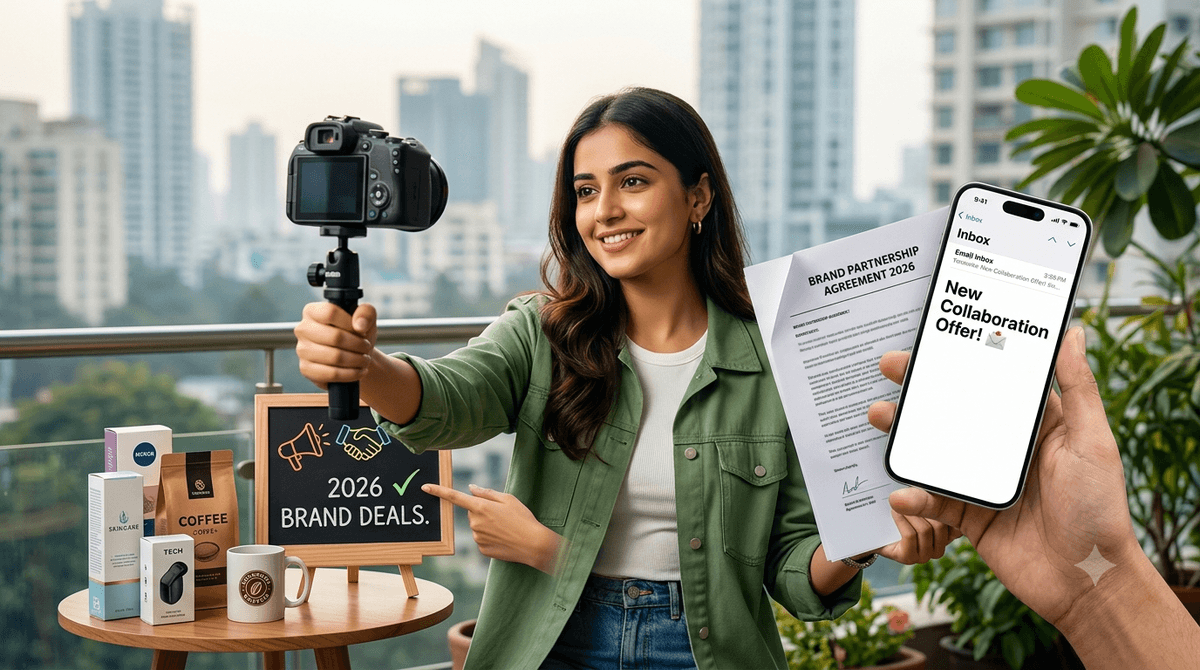
How To Get Your First Brand Deal as a Small Creator — The No-B.S. Guide I Used Myself
Look, I'm not a big influencer. When I started, I had maybe 1,200 followers on Instagram, and my reach barely touched 5,000 views on a good day. But I still remember the first time a brand slid into my DMs — a small skincare startup — and said, "We love your content, would you be open to collaborate?" In that moment, I felt like I had won some kind of war.
But here's the real truth nobody tells you: that first brand deal didn't just "come to me." I pulled it toward me. And today I'm going to break down exactly how a small creator (even with 1,000–5,000 followers) can land their first paid collaboration. No fluff. No fake guru advice. Just what actually worked for me and has worked for dozens of creators I've talked to since.
And somewhere in the middle of this post, I'm going to share the one automation move that saved me from losing a deal because of a missed DM — but we'll get there naturally. Let's start from the ground up.
1. Stop Waiting for Brands to "Discover" You
The biggest mistake small creators make? They post content, use relevant hashtags, and then just... wait. They think if their content is good enough, brands will magically find them. Let me be blunt — that's a lottery ticket mindset. Brands are busy. They're not scrolling through small accounts hoping to throw money at someone. You have to become the one who initiates.
I learned this the hard way. For six months I posted consistently, tagged brands in my stories, and got nothing but bot comments. The moment I flipped the script and started treating myself like a business, things changed. Your content is your portfolio, but your pitch is your handshake.
What "Treating Yourself Like a Business" Actually Means
- You have a niche, not just random posts. Brands need to understand what you stand for in 3 seconds. Fitness for busy moms? Budget tech reviews? Vegan meal prep under 15 minutes? Own it.
- Your bio is a resume, not a quote. If your bio says "just living life" or has a random emoji string, change it today. It should say exactly what you do and who you help.
- You have a way to be contacted. Email in bio. Not just "link in bio" — an actual email address visible. Make it stupidly easy for someone to reach you.
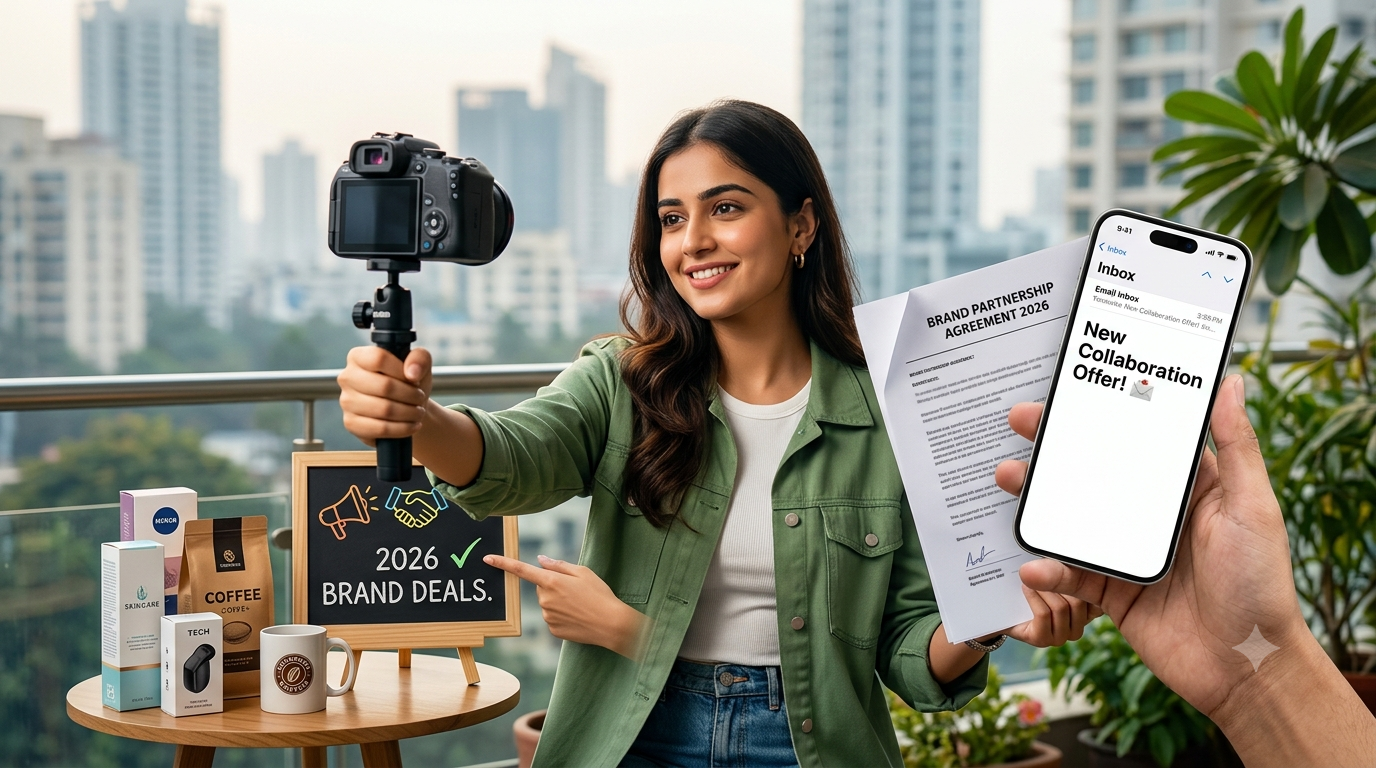
2. Build a Media Kit Before You Think You Need One
I used to think media kits were only for creators with 50k followers. That's wrong. A media kit is just a one-page PDF or a simple Canva document that says: "Here's who I am, here's my audience, and here's how I can help your brand." When a brand asks for your "rates and stats," and you send a polished media kit in 5 minutes instead of typing a messy DM — you've already won half the trust.
What Your First Media Kit Should Include (Keep It Simple)
- Your photo and a one-line bio. Friendly, professional. Not a novel.
- Your core numbers. Follower count, average reach, engagement rate, and one standout stat. For small creators, engagement rate is your superpower. If you have 2k followers but a 15% engagement rate, lead with that. Brands care more about real engagement than vanity follower counts.
- Audience demographics. Age range, gender split, top locations. If you don't have enough data yet, use Instagram insights and describe your community honestly — "mostly India-based women 22-34 interested in clean beauty."
- Past collaborations (if any). Even if you did a barter collab with a tiny local cafe, include it. It shows you've worked with brands before and delivered.
- Your offerings. 1 Instagram Reel, 1 Story series, 1 dedicated post, etc. Keep it to 2-3 clear packages.
- Contact info. Email and Instagram handle.
Make this once, export as PDF, and keep it ready. You'll update numbers every month. This small document makes you look 10x more professional than 90% of creators in your follower bracket.
3. Find the Right Brands to Pitch (Stop Targeting Nike)
When I first started, I made a list of dream brands — big names, fancy logos. I sent them pitches and heard nothing. Why? Because big brands already have agencies managing micro-influencers, and they often work with creators who have proven track records. Your first deal will likely come from small to mid-sized brands that are actively growing and have a marketing budget but not a massive influencer team.
Where to Find These Brands
- Instagram itself. Look at brands that similar creators (slightly bigger than you) are working with. Check their tagged posts. If a creator with 8k followers is promoting a new activewear brand, that brand is definitely open to micro-creators.
- Ads you're already seeing. If a brand is running Instagram ads, they have budget. If the ad feels small-budget and a bit raw, even better — they're likely handling things in-house and are more reachable.
- Marketplace platforms. Sites like Hobo.Video, Plixxo, or even international ones like Collabstr sometimes have listings for nano creators. But don't rely only on these; direct pitching is still king.
- Local businesses. Your neighborhood cafe, a nearby clothing boutique, a dental clinic wanting awareness. They often have marketing money but no one to create content. Don't underestimate local — I've seen creators build recurring income starting with local brands.
Make a list of 30 brands. Not 5. Not 10. Thirty. Because outreach is a numbers game, but it's also a relevance game. Only pitch brands where your audience would genuinely care. If you post about parenting and you pitch a gaming chair brand — it won't work even with 100k followers.
4. The Perfect Pitch DM (Without Sounding Desperate)
This is where most creators freeze. They either write a paragraph-long begging message or a generic "Hey, I love your brand, collab?" Neither works. Your pitch needs three things: personalization, a clear value proposition, and a low-friction next step.
The Pitch Template That Got Me My First "Yes"
"Hey [Brand Name / Founder Name if you can find it],
I'm [Your Name], I create content around [niche] — primarily for an audience of [number] [describe audience, e.g., budget-conscious moms in India]. I've been following [Brand Name] for a while and genuinely loved your recent [mention specific product or campaign — this proves you did homework].
Free Instagram Automation Tool
Try for Free
No hidden costs. No credit card required.
Auto DM Replies
Instantly reply to comments and DMs 24/7.
No Coding Required
Connect your Instagram in minutes.
I think my audience would connect really well with [product name] because [one specific reason]. I'd love to create a Reel showcasing it in my authentic style — you can see a recent example here: [link to one of your best performing Reels].
I've attached my media kit with all my stats and audience insights. Would you be open to exploring a paid collaboration? Happy to discuss ideas further on a quick call.
Thanks,
[Your Name]"
Notice what this does. It's respectful but not begging. It shows you've actually looked at their brand. It offers a concrete content idea. And it has a clear ask — "paid collaboration." Don't hide that you expect to be paid. You're a business, not a charity.
5. What Nobody Tells You About DM Follow-ups (And How I Almost Lost ₹15,000)
Here's a story I haven't shared much. Last year, I pitched a sustainable clothing brand. They replied after three days: "Looks interesting, can you share your rates?" But I was traveling, Instagram didn't show me the notification properly, and I saw the message... 5 days later. By the time I replied, they had already moved forward with another creator. I lost that deal because of a delayed response.
That experience woke me up. Small creators don't have managers or assistants; we're doing everything alone — content, editing, pitching, and managing DMs. And Instagram DMs are honestly a mess. Requests folder, general folder, message notifications that don't fire properly... it's a system designed to let things slip through the cracks.
So I started looking for ways to make sure I never miss an important DM again. I needed something that could auto-reply to certain keywords, organize inquiry messages, and let me set quick replies for common questions about rates and availability. That's when I came across this tool that genuinely streamlined my entire outreach process.
Look, I have to mention this because it's part of my actual workflow now. I use GroHubz — it's an Instagram DM automation tool that's Meta Verified, so no shady third-party stuff that risks your account. It lets you set up auto-replies for specific keywords, manage up to 1000 DMs per month on the free trial, and the paid plan starts at just ₹99 monthly. When a brand DMs me with words like "collaboration" or "rate," I have instant acknowledgment replies going out even when I'm asleep. It literally saved me from missing two brand inquiries last month alone. If you're serious about treating your creator journey like a business, you need a system for your DMs. You can check out GroHubz here — the free trial gives you plenty to test the waters.
The core lesson here isn't about a tool — it's about never leaving money on the table due to slow replies. Whether you use an automation tool or manually check your requests folder twice a day, have a system. Brands respect creators who respond promptly. It signals professionalism.
6. How to Price Yourself When You Have Small Numbers
This question haunts every small creator. "What if I ask too much and they say no? What if I ask too little and they think I'm cheap?" Let me give you a framework that removes the guesswork.
The "Value Anchor" Pricing Method
Don't price based on followers. Price based on the value of one Reel to that brand. If a brand runs Facebook ads, they might be paying ₹2-5 per click. Your Reel, if it gets 5,000 views and drives even 50 clicks to their profile or website — that's ₹250 worth of traffic at ad rates. But a Reel also gives them credibility, social proof, and content they can repost. That's worth more.
For a creator with 1,500–5,000 followers and solid engagement (8%+), here's a realistic starting range for your first paid deals:
- 1 Instagram Reel + 1 Story: ₹1,500 – ₹4,000
- 1 Dedicated Reel + 2 Stories + link in bio for 24hrs: ₹3,000 – ₹7,000
- Barter-only collab (product in exchange for content): Only accept this if the product value is genuinely useful to you and you'd buy it yourself. Never do free work that costs you time and creativity for a ₹300 product.
Start slightly lower for your first 2-3 deals, but never do free. When I took my first ₹2,000 deal for a single Reel, I was nervous. But the Reel performed well, the brand was happy, and they came back the next month with a ₹5,000 offer. Your first deal is a proof-of-concept for both sides.
7. Deliver More Than You Promise (Without Burning Out)
Once a brand says yes and you agree on deliverables, this is where you build your reputation. Small creators have one massive advantage over macro-influencers: you can care more about one brand. A creator with 500k followers is doing 10 deals a month; you might be doing 2. Give those 2 your best.
Here's what "over-delivering" safely looks like:
- Promise 1 Reel and 1 Story. Deliver that, plus one extra organic story a week later saying "still loving this product." It takes 30 seconds, and the brand will notice.
- Send them screenshots of your insights 3 days after posting — reach, likes, shares, saves. Don't wait for them to ask. This simple act makes you look like a pro.
- Give one piece of feedback about the product or the collaboration process. "Hey, my audience really loved the packaging, a few asked about the fragrance notes — maybe in the next launch you could highlight that." This positions you as a partner, not just a poster.
I've had brands DM me months later saying, "We want to work with you again for our new launch" — all because I sent those insight screenshots without being asked. It creates trust that's hard to break.
8. Turn One Deal Into a Recurring Relationship
Your first brand deal is not the end goal. It's the sample that leads to a retainer. Most brands that work with micro-creators are testing the waters. If you prove that you can move the needle — even a little — you become their go-to creator.
Convert views into customers
Capture Leads
From story views & comments.
Recover Lost Sales
Turn missed engagement into revenue.
Automated Follow-ups
Never miss a potential customer.
14+ Powerful Features
Everything you need to automate Instagram.
After a successful collaboration, follow up after 3-4 weeks. Not in a pushy way. Something like:
"Hey [Name], hope things are going great with [Brand]! I was just revisiting the Reel we did together and noticed it's still getting saves — the audience really connected with it. If you have any upcoming launches or campaigns where you need authentic content, I'd love to be considered. I have some fresh content ideas that could fit your summer lineup well."
This one follow-up message has landed me 2 additional deals from the same brand. Most creators never follow up. They finish the deal and disappear. Be the one who stays on their radar respectfully.
9. Common Pitfalls That Keep Small Creators Stuck
I want to address the things I see holding back talented creators from landing their first paid work. Some of these are uncomfortable, but they need to be said.
Pitfall 1: "I'll pitch when my content is perfect"
Your content will never feel perfect. Perfectionism is procrastination wearing a mask. Brands care about consistency and authenticity, not cinema-level production. I got my first deal with a Reel shot on my phone with natural window light. The script was strong, the review was honest — that's what mattered.
Pitfall 2: Only pitching brands you "love"
It's okay to pitch a brand you "like" not "love." As long as it fits your niche and you're not lying to your audience, you can work with brands that aren't your dream names. Some of my best-paying early deals came from brands I had never heard of before they reached out or I found them via research.
Pitfall 3: Ignoring the business side
Creativity alone won't pay bills. You need to track your DMs, manage inquiries, and maintain a professional workflow. This is where I'll loop back to something I mentioned earlier — if you're still manually digging through your general and requests folders every few hours, you're going to miss opportunities. I missed one and it stung. Now I have a system, and honestly, using GroHubz for DM automation has been a huge part of that system. It filters brand inquiries, sends instant replies, and keeps things organized without me being glued to my phone 24/7. The free trial handles up to 1000 DMs a month, which is more than enough for a growing creator.
10. Your 7-Day Action Plan (Start Today)
Reading this post is useless if you don't take action. Here's exactly what I want you to do in the next week:
- Day 1: Optimize your Instagram bio. Clear niche, email visible, no cringe quotes.
- Day 2: Create your media kit on Canva. Don't overthink — a simple 2-page PDF is fine. Use real numbers from your insights.
- Day 3: Research and make a list of 20-30 brands that fit your niche and are realistic for your size.
- Day 4: Write your pitch template. Customize it for the first 5 brands on your list and send those DMs. Don't send all 30 at once — pace yourself so you can handle replies.
- Day 5: Set up a DM system. Whether it's manual checking twice daily or setting up GroHubz automation to catch collaboration keywords, make sure no inquiry slips away.
- Day 6: Create one high-quality Reel that showcases your content style — this is the piece you'll link in future pitches as your best example.
- Day 7: Follow up on any replies. Reply to every single one, even rejections. A "no" today can become a "yes" in three months.
Final Thoughts: You Belong in the Room
I know it feels intimidating when you see creators with huge followings getting all the big deals. But here's what I've realized after being on both sides — small creators often bring higher trust, better engagement, and more authentic conversions than macro-influencers. Brands are waking up to this. The nano and micro-creator economy is booming, and there's room for you.
Your first brand deal probably won't be life-changing money. Mine was ₹2,000. But it proved to me that this is real. That someone would pay me for content I was already making. That shifted my mindset permanently. And from there, it's just compounding — better pitches, higher rates, stronger relationships.
So go build that media kit. Send that first pitch. Set up your DM workflow so you never miss a beat. And remember: you're not "just a small creator." You're a business owner with an audience that trusts you. Brands pay for trust. Now go get that deal.
And hey, if you found this guide helpful, I'd love to hear about your first brand deal when it happens. Slide into my DMs — they're always open (and organized).
Boost Your Instagram Engagement Today
Stop letting potential customers wait in your DMs. Let GroHubz handle it.
Try for Free